
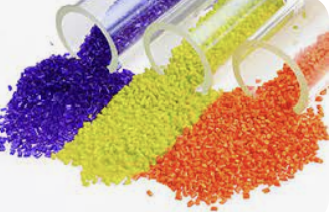
Modified materials are a class of materials that are used to enhance the performance of materials or give them new functions by adding specific additives or fillers to basic plastics (e.g. PC, PMMA, etc.).
In automotive headlamp injection moulding, the application of modified materials is crucial to meet the comprehensive needs of optical performance, weather resistance, mechanical strength and so on. The following are the main characteristics and classification of modified materials:
In automotive headlamp injection moulding, the application of modified materials is crucial to meet the comprehensive needs of optical performance, weather resistance, mechanical strength and so on. The following are the main characteristics and classification of modified materials:
I. Core features of modified materials
1. Targeted optimisation of performance
- On the basis of retaining the original advantages (light transmittance, toughness) of the base material (e.g., PC), make up for its shortcomings (e.g., poor scratch resistance, easy yellowing).
2. Multi-functional composite
- Through the synergistic effect of a variety of additives, while achieving multiple functions such as impact resistance, UV resistance, light diffusion.
3. Process adaptability
- Modified materials need to adapt to high-precision injection moulding process (e.g. fluidity, controllable shrinkage).
Common modification types and characteristics
Types of materials - additives: glass fibre (GF), carbon fibre (CF), mineral fillers (such as talc).
- Features:
- Enhance the rigidity and flexural strength of the material (10% addition of GF can enhance the strength of PC by 30%-50%).
- Reduce the coefficient of thermal expansion, reduce the deformation after moulding (e.g. lamp bracket parts).
- Disadvantages: Decrease in light transmittance (need to control the amount of addition <15%), may increase the wear and tear of the mould.
2. Weatherability Modification
- Additives: UV absorber (UV-531), Hindered Amine Light Stabiliser (HALS).
- Features:
- Inhibit UV-induced yellowing and degradation (extend the outdoor life of headlights to more than 10 years).
- Good compatibility with the substrate is required to avoid precipitation affecting light transmission.
3. Optical Modification
- Additives: light diffusers (silicon dioxide, silicone microspheres), anti-glare agents.
- Features:
- Light diffusers make light uniform and soft (particle size 5-20μm, additive amount 0.5%-2%).
- Anti-glare modification reduces harsh light spots through surface microstructures or additives (e.g. fogged PC).
4. Abrasion/scratch resistance modification
- Additives: organosilicon, nano aluminium oxide (Al₂O₃).
- Features:
- Enhance surface hardness (up to 2H-4H), reduce car wash or gravel scratch marks.
- Need to balance hardness and toughness to avoid brittle cracking.
5. Flame retardant modification
- Additives: phosphorus flame retardant, bromine-antimony composite system (need to comply with ROHS regulations).
- Features:
- Meets the fire protection standard for car lamps (e.g. UL94 V-0 class), but may affect the light transmittance and temperature resistance.
6. Lightweight modification
- Additives: microsphere blowing agent, hollow glass beads.
- Features:
- Density reduction of 10%-20%, to achieve lightweight lamps (such as micro-foam injection moulding process).
- Bubble size (<50μm) needs to be controlled to avoid light scattering.
Modified materials are also used in the production of home appliances and daily commodity. To enhance product functionality
Modified materials are also used in the production of home appliances and daily commodity. To enhance product functionality